
In the world of gardening, few experiences rival the excitement of watching a tiny seed transform into a thriving plant. As urban homesteaders, understanding the process of seed germination is essential for cultivating healthy, productive gardens in our limited spaces. As I embark on another gardening season, I’m filled with excitement and anticipation, knowing that the seeds I saved from my tomato plants last year will soon sprout new life in my garden.
Stage 1: Imbibition:
Imbibition, or the absorption of water by the seed, is the first step in the germination process. As the seed absorbs water, it swells, softening the seed coat and activating enzymes that initiate metabolic activity.
Stage 2: Activation of Enzymes:
With sufficient moisture and warmth, enzymes within the seed become activated, breaking down stored nutrients and converting them into forms that the emerging seedling can use for growth. This metabolic activity fuels the elongation of the embryonic stem (hypocotyl) and the emergence of the radicle, the embryonic root.
Stage 3: Emergence of the Radicle:
The radicle, or primary root, is the first part of the seedling to emerge from the seed coat. It anchors the seedling in the soil and begins to absorb water and nutrients from the surrounding environment, supporting further growth and development.
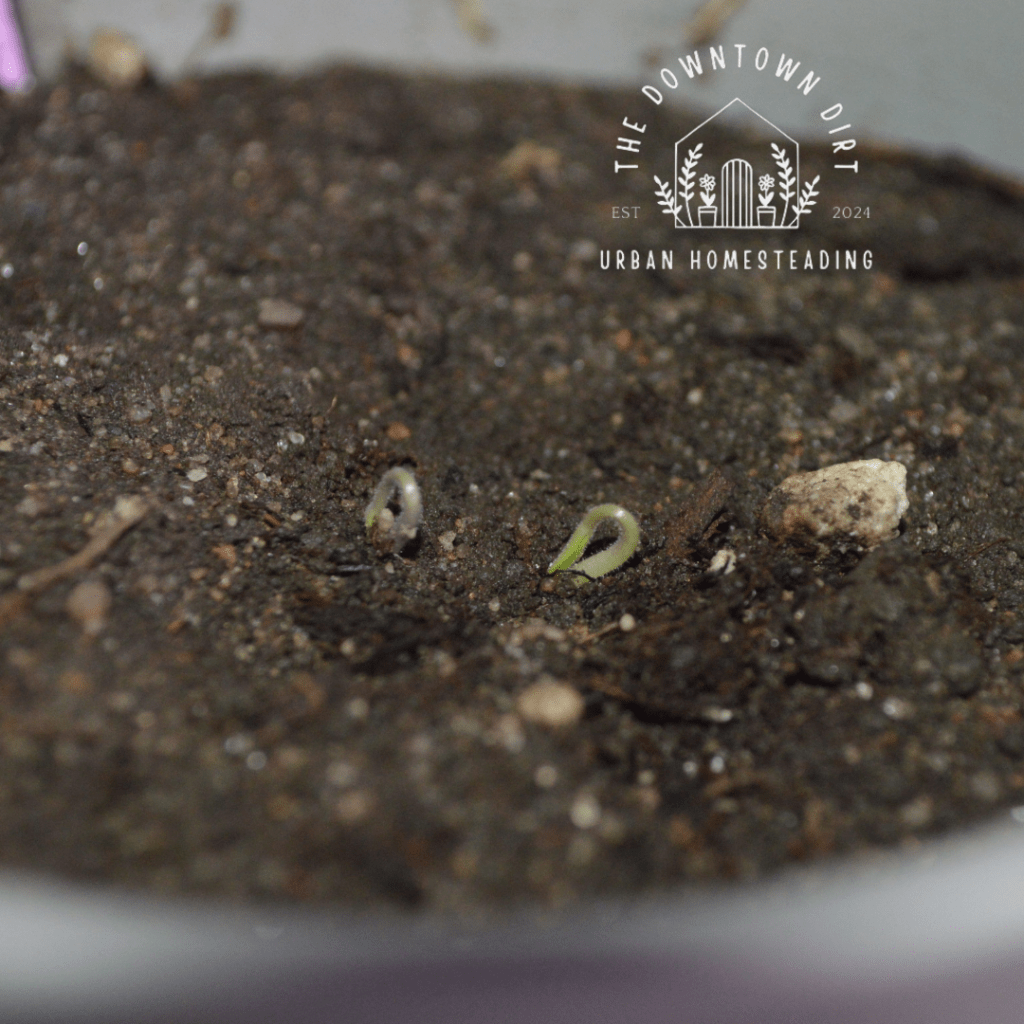
Stage 4: Development of Cotyledons:
At the tip of this embryonic root grows a remarkable structure—the plumular hook. Shaped like a tiny shepherd’s crook, the plumular hook serves as a protective mechanism, aiding the seedling in its ascent through the soil.

As the radicle grows, it is followed by the emergence of the cotyledons, or seed leaves. In tomato seeds, the cotyledons remain within the seed coat during germination and only emerge once the seedling has established itself above ground.
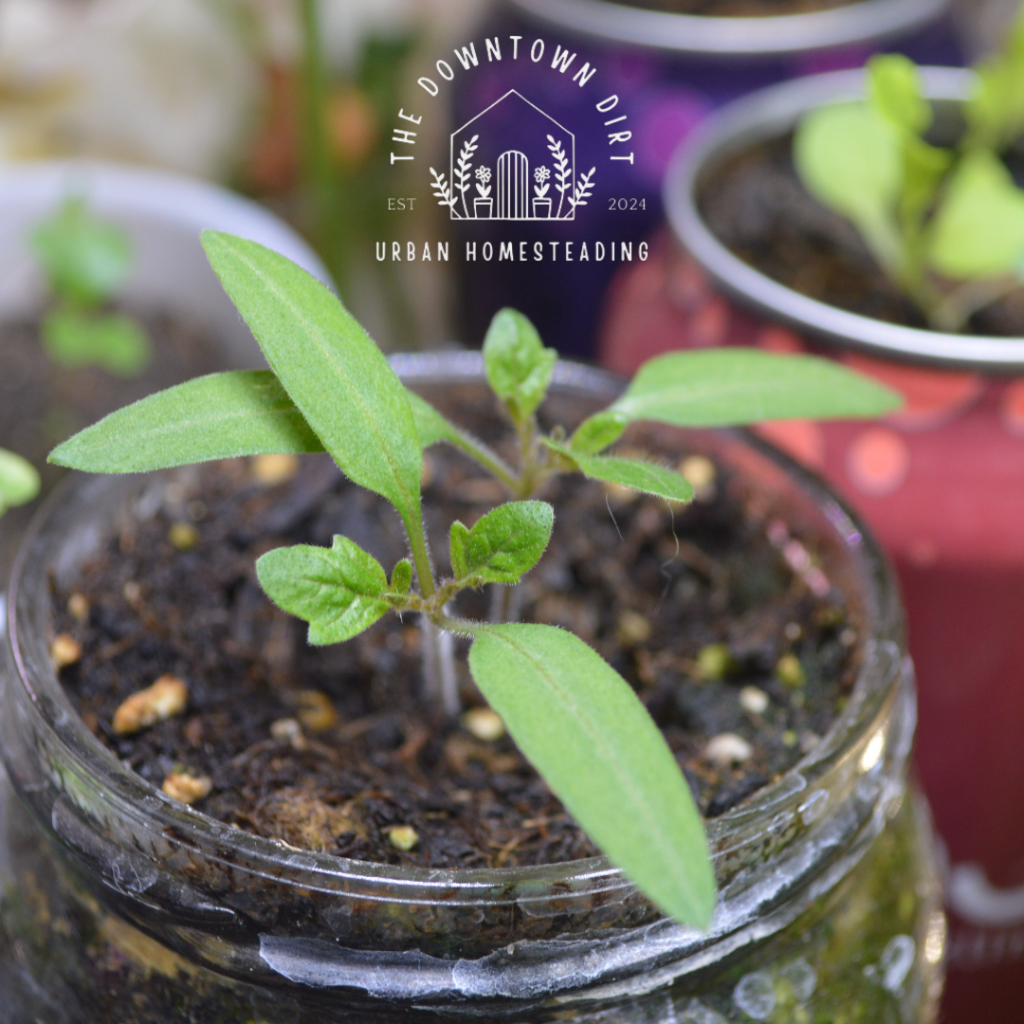
Stage 5: Emergence of True Leaves:
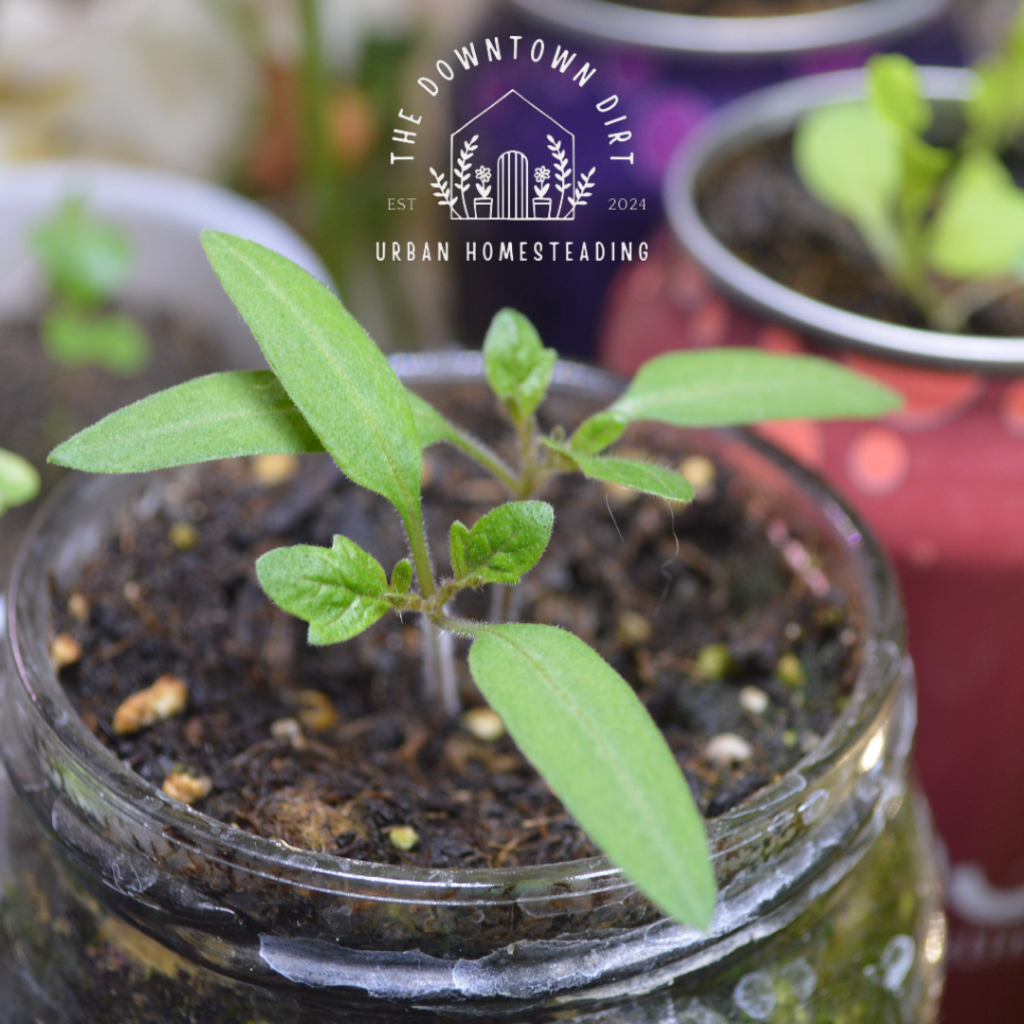
Following the cotyledons, the seedling begins to produce its first true leaves—the leaves that resemble those of the mature plant. These leaves contain chlorophyll and are responsible for photosynthesis, providing the seedling with energy for continued growth and development.
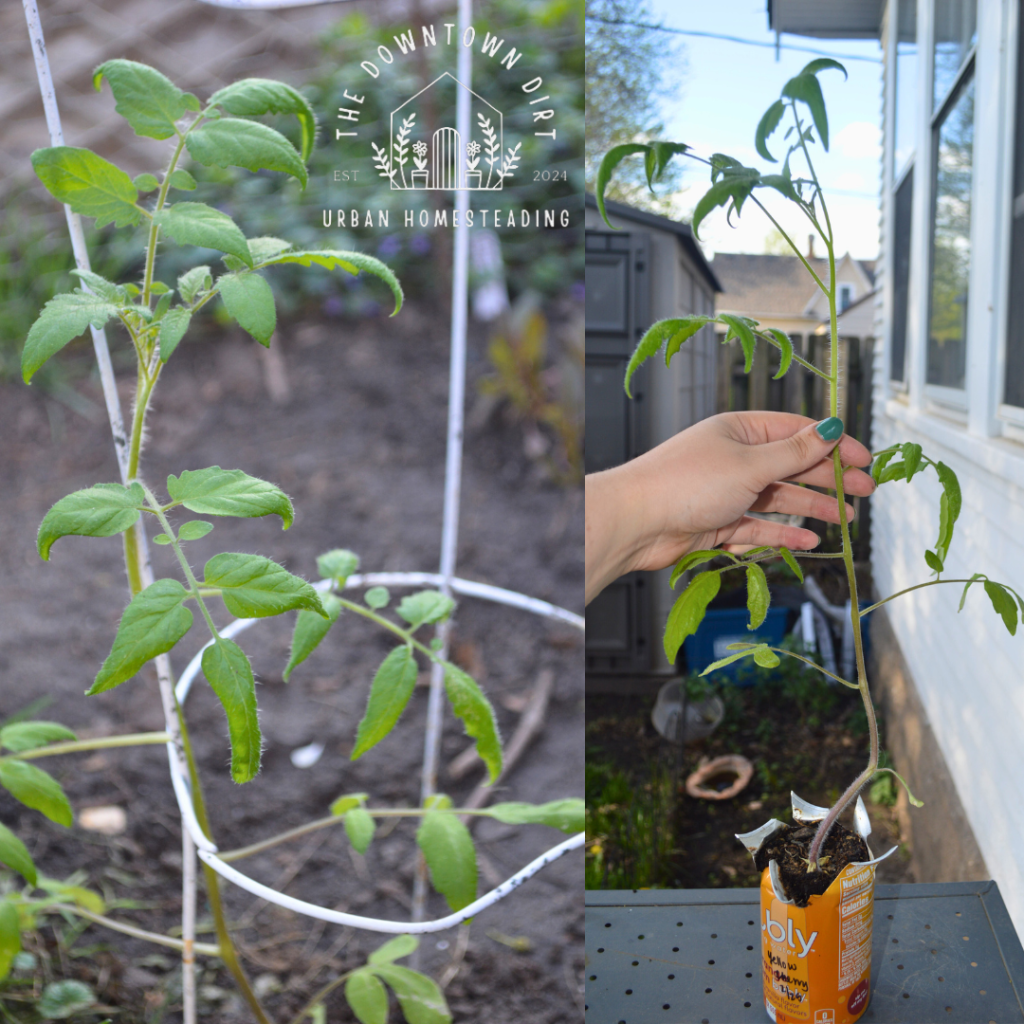
From the moment a tomato seed is planted to the emergence of its first true leaves, the journey of germination is a testament to the miracle of life and the resilience of nature. As urban homesteaders, understanding this process allows us to provide the optimal conditions for our seeds to thrive, ensuring bountiful harvests and a deeper connection to the cycles of growth and renewal. So, the next time you plant a tomato seed, take a moment to marvel at the intricate dance of life unfolding beneath the soil—and rejoice in the promise of abundance that lies ahead. Happy gardening!


 The Downtown Dirt
Leave a comment