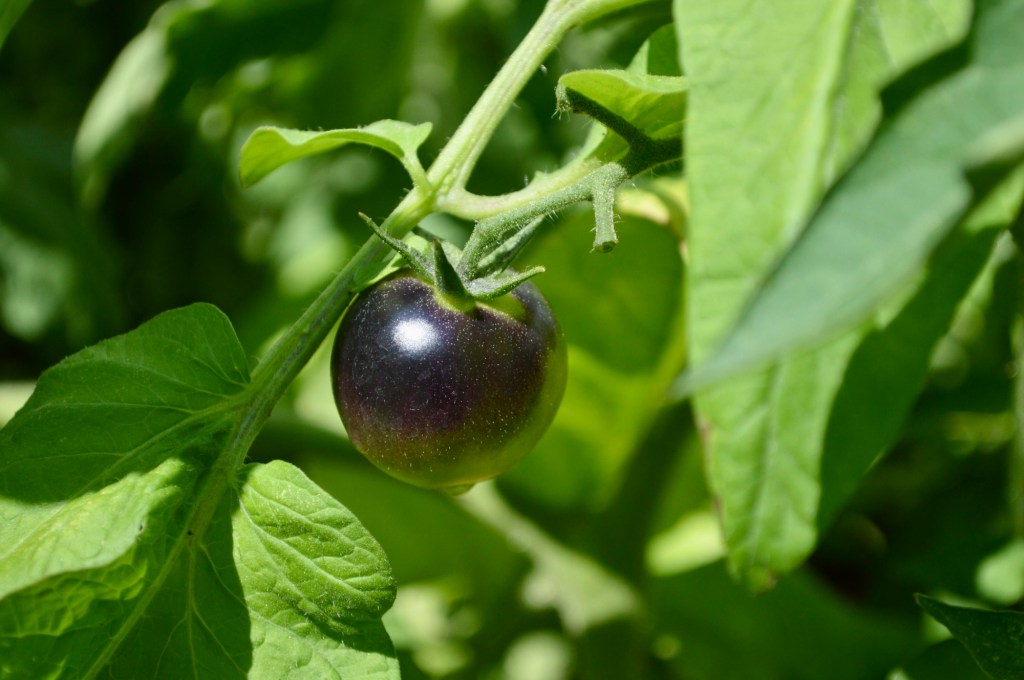
When it comes to adding unique flavors and colors to your homestead garden, few plants can rival the allure of black cherry tomatoes. These little gems offer a rich, complex taste that sets them apart from their red, yellow, and orange cousins. In this post, we’ll delve into the fascinating history of black cherry tomatoes, share tips on how to grow them, explore their plant and fruit characteristics, and reveal some secrets to achieving the deepest, darkest hues. Let’s dive in!
The History of Black Cherry Tomatoes
Black cherry tomatoes are a relatively recent addition to the world of heirloom and specialty tomatoes. They are a variety of the Solanum lycopersicum, which is native to the Americas. The “black” color in these tomatoes comes from the presence of anthocyanins, pigments responsible for the deep purple hues in blueberries and eggplants.
The introduction of black cherry tomatoes can be traced back to the late 20th century. They are a cross-breed of traditional cherry tomatoes with varieties that have darker pigments. This innovative cross-breeding resulted in a unique tomato that not only offers a visually striking appearance but also a rich, tangy-sweet flavor that quickly won the hearts of gardeners and chefs alike. Plus – lets be honest. They look super cool!
How to Grow Black Cherry Tomatoes

1. Choosing the Right Location: Black cherry tomatoes thrive in full sunlight, so pick a spot in your garden that gets at least 6-8 hours of direct sun each day. Ensure the soil is well-draining to prevent root rot, which is common in waterlogged soil.
2. Soil Preparation: Prepare the soil by incorporating compost or well-rotted manure to enrich it. Tomatoes prefer a slightly acidic to neutral pH (6.0 to 7.0). Adding organic matter will improve soil structure and provide the nutrients your plants need.
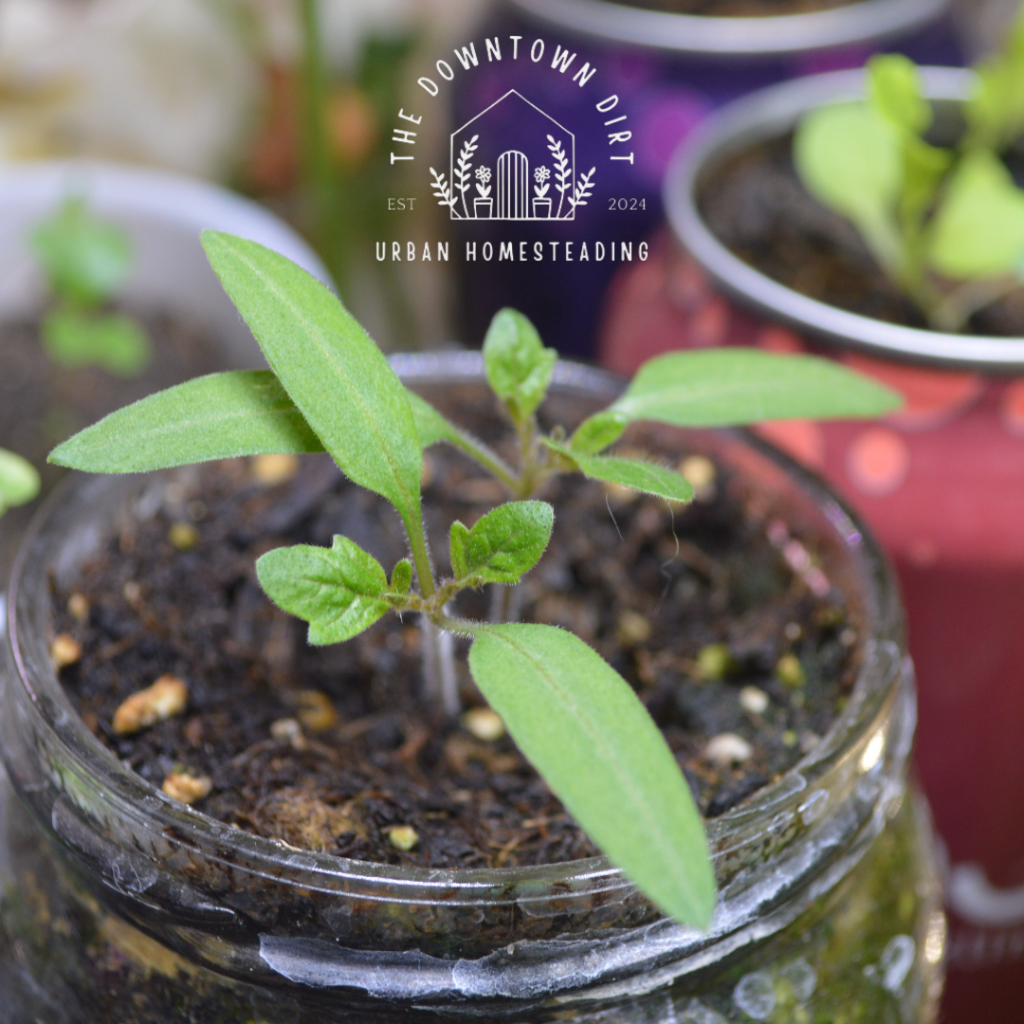
3. Planting: Start seeds indoors 6-8 weeks before the last expected frost. Sow the seeds in seed-starting mix and keep them warm (70-80°F) until they germinate. Transplant seedlings outdoors after the danger of frost has passed and the soil has warmed up.
4. Care and Maintenance: Water regularly but avoid overhead watering to reduce the risk of fungal diseases. Mulch around the base of the plants to maintain soil moisture and temperature. Black cherry tomatoes can grow quite tall, so provide sturdy stakes or cages to support them.
5. Fertilization: Tomatoes are heavy feeders. Use a balanced fertilizer with equal parts nitrogen, phosphorus, and potassium. Once the plants start flowering, switch to a fertilizer higher in phosphorus to promote fruit development.
6. Spacing: Proper spacing is essential for maintaining the health of your tomato plants. I recommend spacing black cherry tomato plants 18-24 inches apart. This distance provides sufficient airflow between plants, helping to prevent fungal diseases and making it easier to access each plant for maintenance and harvesting.
As a greedy gardener with limited space and a tendency to overplant, I often find myself repeating the same mistake of planting too closely together. This crowding makes it difficult to reach some plants and restricts airflow, leading to potential issues. This year, I increased my plant spacing from 12 inches to 18 inches, but I plan to increase that to 24 inches next season for better results.

Container Gardening: Finding the Perfect Size
For those of you gardening in containers, selecting the right size is crucial for the success of your black cherry tomatoes.
1. Ideal Container Size: Choose containers that are at least 12-18 inches in diameter and 12-14 inches deep. This size will provide enough room for the roots to spread out and access nutrients and water effectively.
2. Benefits of Larger Containers:
- Root Development: Larger containers allow the roots to grow more freely, which supports healthier plants and better fruit production.
- Moisture Retention: Bigger containers hold more soil, which helps retain moisture and reduces the frequency of watering. This is especially beneficial in hot climates or for busy gardeners.
- Support for Growth: A larger container can accommodate the vigorous growth of indeterminate varieties and provide more stability for the plant.
3. Container Material and Drainage: When choosing a container, consider materials like plastic, clay, or fabric. Ensure the container has adequate drainage holes to prevent waterlogging, which can lead to root rot. If your container lacks drainage, you can drill holes yourself.
4. Practical Tips:
- Weight Consideration: Larger containers will be heavier, especially when filled with soil and water. Make sure your chosen location can support the weight or be prepared to move the container carefully.
- Regular Fertilization: Container-grown tomatoes deplete soil nutrients more quickly than those in garden beds. Use a high-quality potting mix and plan to fertilize regularly with a balanced, water-soluble fertilizer to keep your plants well-nourished.
- Support Systems: Even in containers, your black cherry tomatoes will need support. Use stakes, cages, or trellises to help manage their growth and keep the plants upright.
Plant and Fruit Characteristics
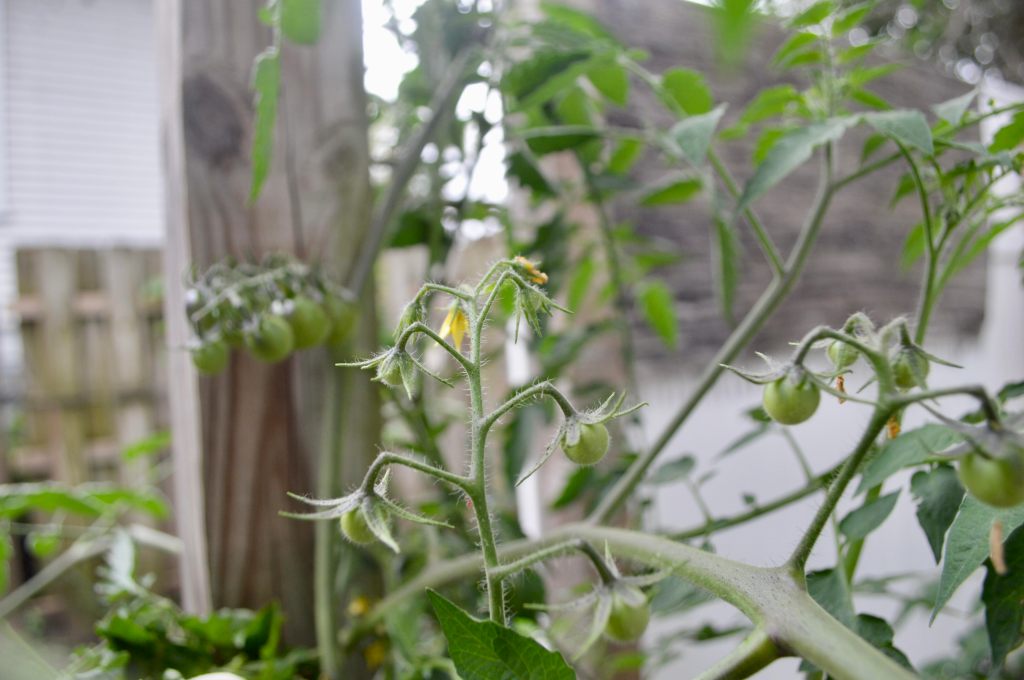
1. Plant Size and Structure: Black cherry tomato plants are typically indeterminate, meaning they continue to grow and produce fruit throughout the season. They can reach heights of 6-8 feet or more, so be prepared for significant vertical growth.
This year, I used stakes for most of my tomato plants, but the stakes were too short, leading to a tangled mess of plants that started drooping and leaning on one another for support. To address this for next year, I plan to switch to an arch trellis. The plants won’t climb the trellis on their own; you’ll need to guide them through it as they grow. However, I used a similar method for my yellow cherry tomatoes this year, and they have remained stable and upright throughout the season
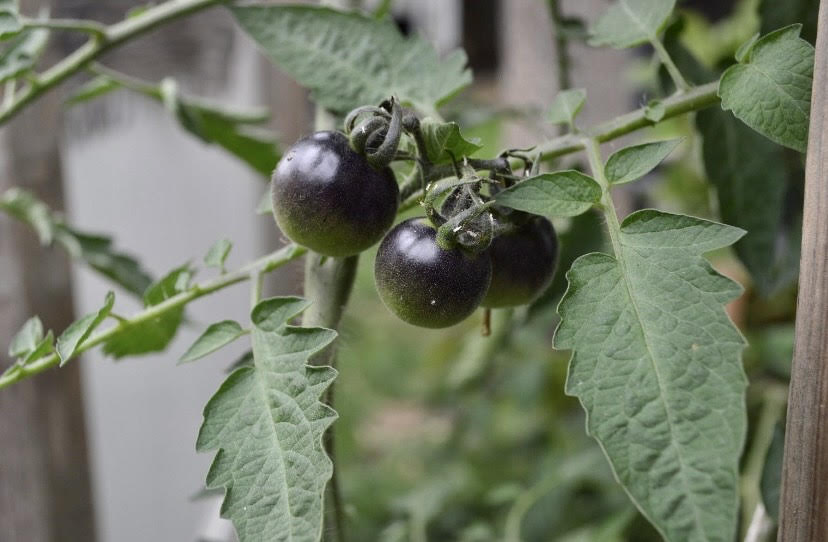
2. Fruit Appearance: The fruits of black cherry tomatoes are small, about the size of a marble, and initially start out as tiny, green spheres when the flowers transition into fruit. As the tomatoes mature, they gradually darken, developing a rich, mahogany to black hue on top. Despite their dark coloration, you’ll still notice a spot on the bottom where some of the original color remains visible. The skin of these tomatoes has a slightly glossy finish, and they grow in clusters, which makes them easy to harvest.

3. Flavor Profile: Black cherry tomatoes are renowned for their rich, sweet, and complex flavor with smoky undertones. The balance of sweetness and acidity makes them a delightful addition to salads, salsas, and even as a standalone snack.
Ripening Techniques and Tips
To get the most out of your black cherry tomatoes, you can choose from a few ripening methods:

1. Ripening On the Vine: Last year, I let my tomatoes ripen fully on the vine, which is often the best method for developing the fullest flavor. This method allows the fruit to mature naturally and achieve its peak sweetness.
2. Ripening Off the Vine: This year, I picked some tomatoes at their first blush, when they are just starting to turn color, and let them ripen on the counter. This approach can be handy if you have a large quantity of tomatoes and want to manage their ripening more effectively.
3. Ripening Green Tomatoes: I also experimented with picking some tomatoes when they were completely green. I placed them in a paper bag with a ripe banana, which releases ethylene gas that helps speed up the ripening process. By checking the bag daily, I was able to enjoy ripe tomatoes without waiting for all the green ones to mature on the vine.
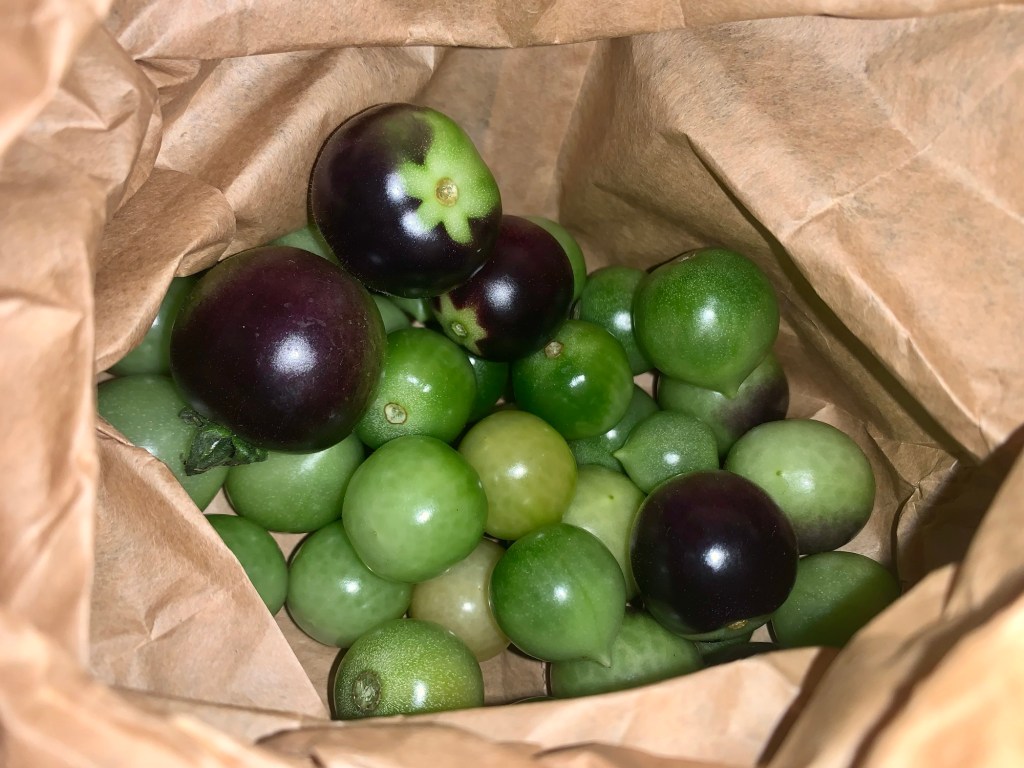
4. Managing Overabundance: Since I had an abundant harvest and it seemed to be taking forever for my tomatoes to start blushing, I picked about 1/4 of the tomatoes while they were still maturing. This strategy allowed the plant to focus its energy on ripening the remaining fruit and improving overall fruit quality.
How to Know When Your Black Cherry Tomatoes Are Ripe
Determining the ripeness of black cherry tomatoes can be a bit tricky due to their dark color. Here’s how to know when they’re ready for harvest:
1. Color Check: While black cherry tomatoes may appear completely black when ripe, this can be misleading. Check the bottom of the tomato for a spot of color. If this spot is green, the tomato is not yet ripe. As the tomato ripens, this spot will gradually turn orange and then red. When it has reached a red hue, it is ripe and ready for eating. If your tomatoes are partially shaded, more of the tomato will be colored instead of black, so it shouldn’t be too hard to tell!
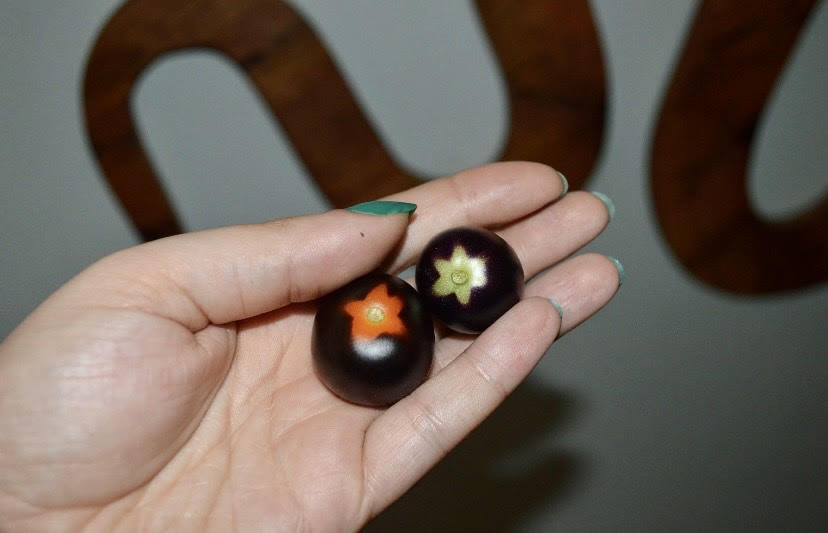
2. Ripening Off the Vine: If you choose to ripen your tomatoes off the plant, you can pull the stem off and look for a “star” shaped area of color where the stem was covering the fruit. This area will reveal the color it was hiding and can help you gauge ripeness.
Achieving the Blackest Black Cherry Tomatoes
To get the deepest, darkest color from your black cherry tomatoes, consider these tips:
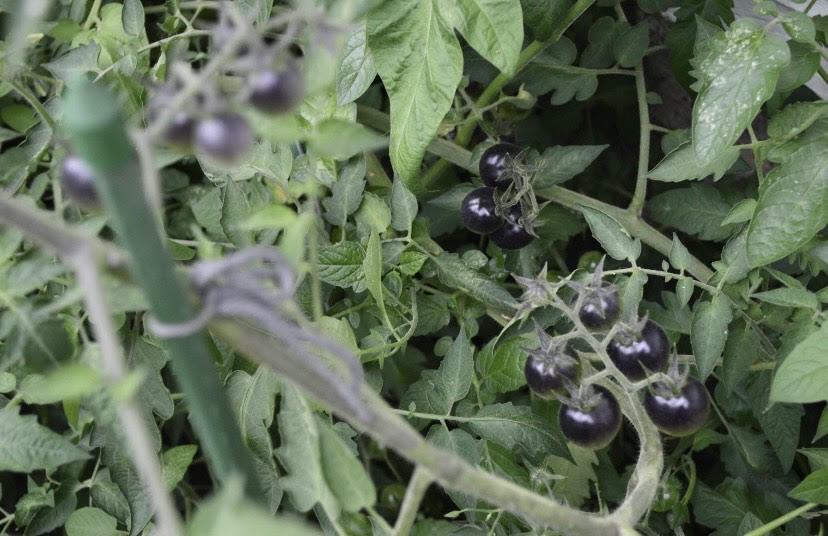
1. Provide Adequate Sunlight: Maximize sun exposure to enhance the production of anthocyanins. The more sunlight the plants receive, the richer the color of the fruits will be.
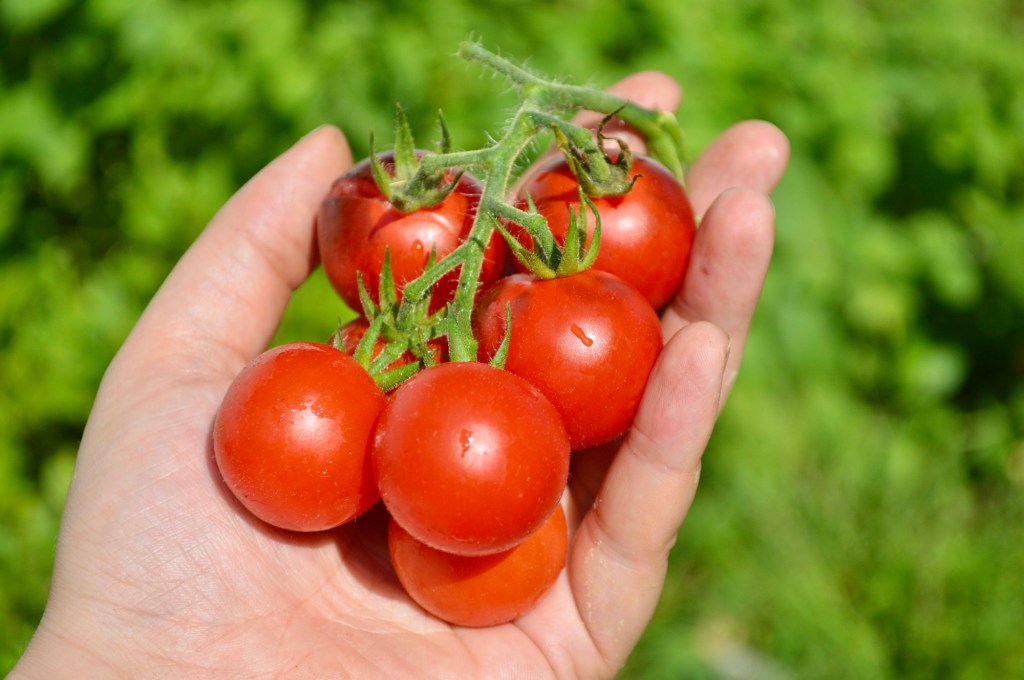
2. Soil pH: Maintain a slightly acidic soil pH, as anthocyanins are more pronounced in this environment. Regularly test your soil and amend it if necessary to keep it within the optimal range.
3. Stress for Color: While excessive stress can harm your plants, moderate stress can sometimes enhance color development. Reducing water slightly as the fruits ripen and ensuring they are not over-fertilized can encourage the plants to produce more intense pigmentation.
Pest and Disease Management
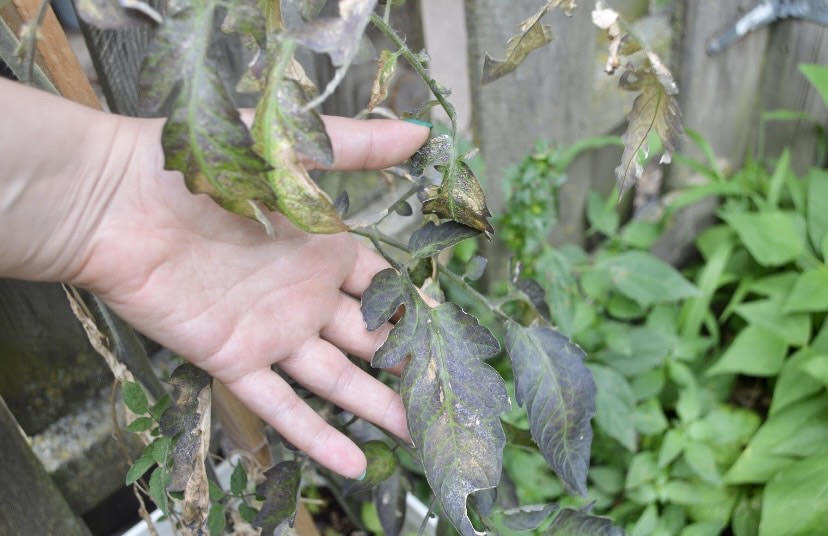
This season has been particularly challenging for me due to an onslaught of fungal and bacterial diseases affecting all my plants. The unusually heavy rainfall we’ve experienced has been a major factor, with Minnesota breaking a state rainfall record this year, compounding the difficulties of maintaining plant health. To address these issues, I’ve been diligent in monitoring my plants for any signs of pests and diseases. I’ve found that employing organic pest control methods, such as companion planting, ensuring adequate spacing between plants for better airflow, and regularly pruning diseased or overgrown suckers, has been essential in managing and mitigating these problems.
Self-Seeding Surprises
This year, I also had a pleasant surprise with self-seeding black cherry tomato plants. After last year’s harvest, some plants reappeared on their own, and I let them grow wild. I had so many volunteer plants that I had to compost a ton of them to keep the garden manageable. It was a bit of a task, but it was also a testament to how vigorously black cherry tomatoes can self-propagate. The remaining volunteers have thrived, even though they’re wrapped around a light post, thanks to a shortage of proper tomato cages in combination with a gardener with an engineering mindset. Despite the haphazard forethought, spacing, and support, these self-seeded plants are flourishing, showing that black cherry tomatoes are quite resilient and adaptable to Minnesota’s climate (Zone 5a). It’s a reminder that sometimes, letting nature take its course can lead to successful results.
Additional Notes
- Companion Planting: Plant basil or marigolds nearby to help repel pests and enhance the overall health of your tomato plants.
- Preservation: Black cherry tomatoes are excellent for preserving. Consider making sauces, salsas, or sun-dried tomatoes to enjoy their unique flavor year-round. I am not sure what I am going to do with mine yet, so for now they are going in the freezer until I make up my mind!
Incorporating black cherry tomatoes into your garden not only adds a splash of color but also introduces a burst of flavor that’s sure to impress. With their intriguing history, straightforward growing requirements, and exceptional taste, these tomatoes are a fantastic choice for any homesteader looking to diversify their vegetable patch.
Happy gardening, and may your black cherry tomatoes thrive with all their rich, dark splendor!


 The Downtown Dirt
Leave a comment