At 5:30 a.m. on August 27th 2024, I snoozed my alarm and snuggled back into bed, savoring the sound of the storm as I clung to the last few moments of sleep. The steady rhythm of the rain was oddly comforting, but my peace was abruptly shattered by a loud crash outside. Startled, I jumped out of bed and ran out into the storm (this was stupid, do not do this). The rain was pouring down so heavily, and it was still so dark, that I couldn’t make out what had happened. All I knew was that something had just gone wrong.
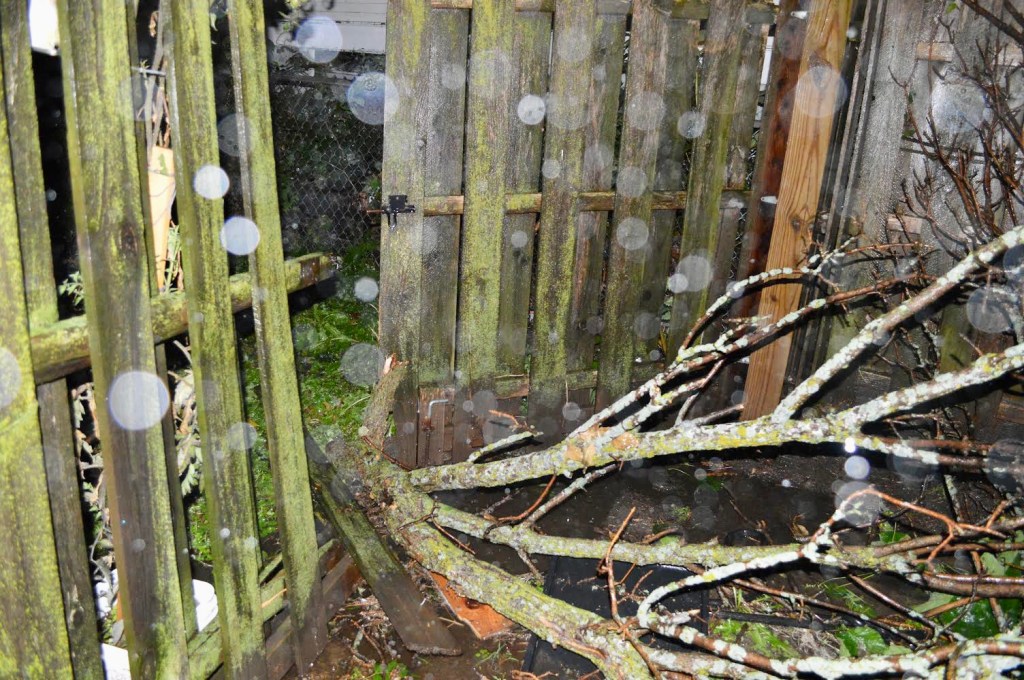
A severe storm had swept through my neighborhood, leaving many without power and water for days. Fallen trees littered every block, and while I was fortunate enough to maintain power and water throughout the ordeal, my little homestead unfortunately wasn’t spared from the storm.
Assessing the Damage
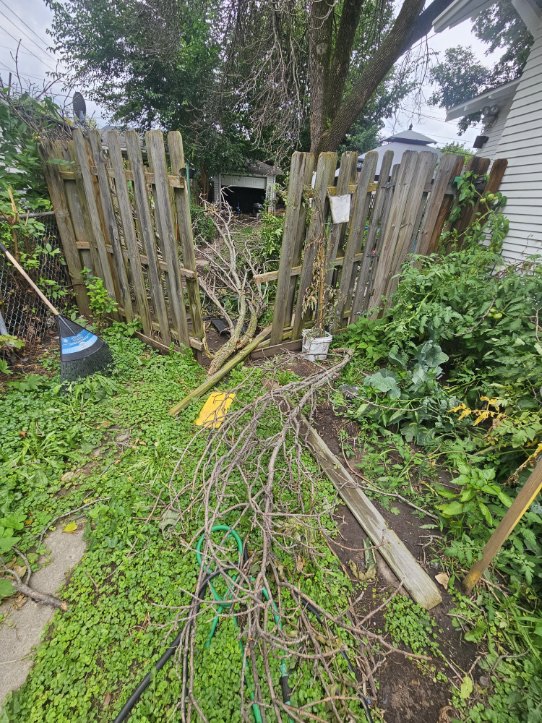
After the storm had cleared, I stepped outside to assess the damage. A large branch had fallen on my fence, another had fallen on one of my pumpkin vines, and my trellis was bent and flattened into the ground. My tomato plants, which I hadn’t kept up with on pruning and had planted too close together, were a tangled, flattened mess. Many of the stakes supporting them had broken or toppled over. As I surveyed the scene, I knew I had a long road ahead to restore my garden.

The Cleanup Process
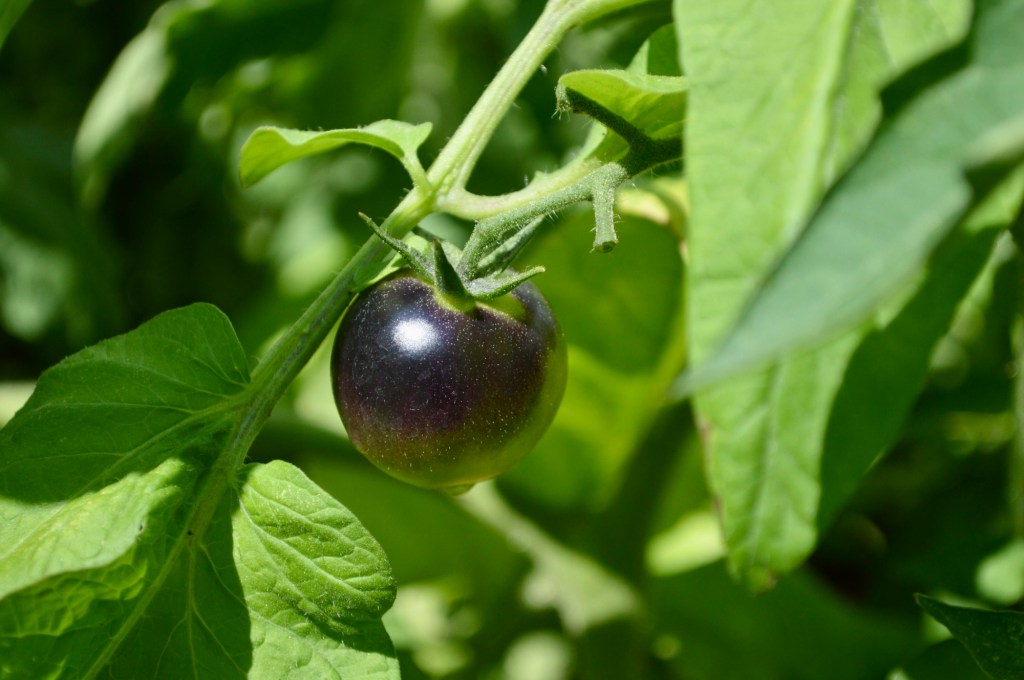
Tomato Rescue: My first priority was untangling and resupporting the tomato plants. This was no small task—many of the stakes were broken, and the plants had become a tangled mass. I spent hours slowly pruning, untangling, and setting the plants back up. The process was tedious, but I knew that giving the plants some support was their best chance of survival. With limited resources and the growing season nearing its end, I improvised by using some of the fallen branches as makeshift stakes to prop the plants back up.
Pumpkin Woes: The storm left my pumpkin trellis completely bent and flattened and beyond repair. Another pumpkin vine was damaged by a fallen branch, but thankfully, the other two fared better. While it was disappointing to see the trellis destroyed, I’m hopeful that the plants will recover. Although the damaged vines don’t look great, I’m optimistic they’ll bounce back—especially since one of them still has a healthy pumpkin growing as if nothing happened. Given how intertwined the vine is with the trellis, I’ve decided to leave it as it is, resting on the ground, until the end of the season. It’s a task I’ll tackle next year.
Corn Catastrophe: Most of my corn had been knocked to the ground, snapping under the weight of the storm and showing signs of disease from laying on the wet ground. Out of the 15 plants I originally had, only four survived. I had no choice but to pull the damaged plants, knowing that Minnesota’s short growing season meant I wouldn’t have time to replant.
The Right Tools Make a Difference
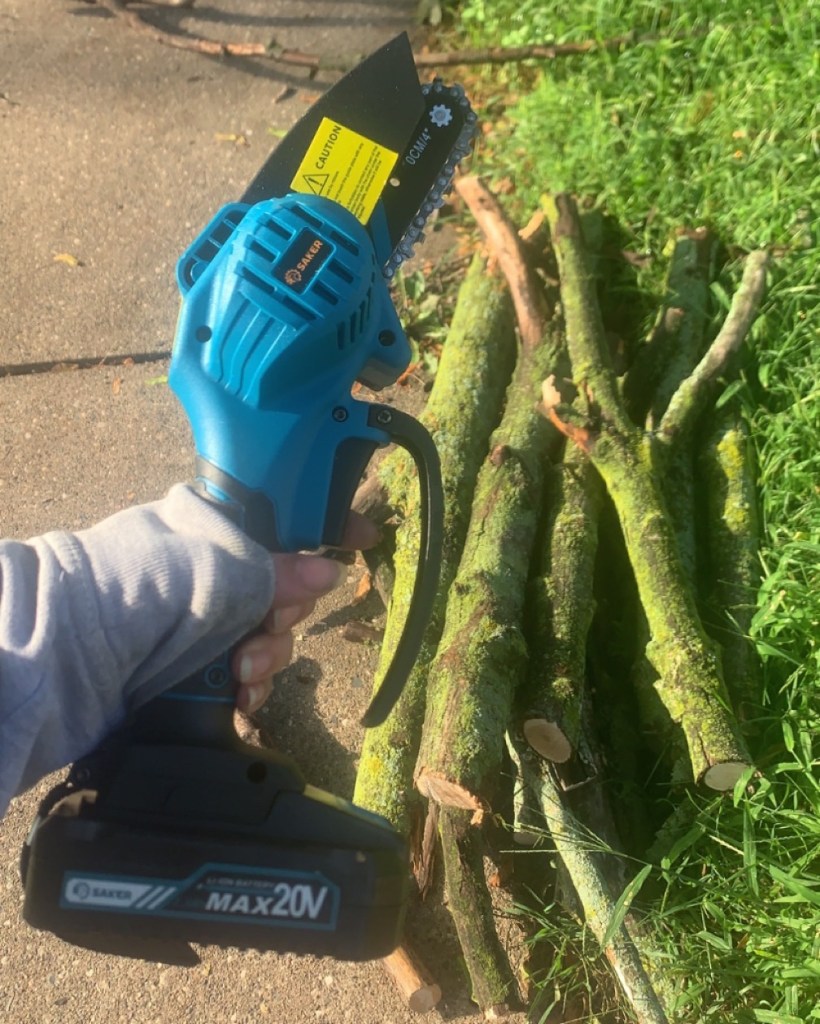
One silver lining in the midst of this chaos was the discovery of how helpful the right tools can be. I ended up purchasing a mini electric chainsaw to help cut up the fallen limbs. Though it was a bit small for the job, with some creative positioning, I managed to cut through the larger branches. The chainsaw was a game-changer, making the cleanup much more manageable. Plus, it was honestly a really fun tool to use!
I was also fortunate to have a neighbor lend me their leaf blower. The small sticks and debris scattered across my yard seemed endless, but the leaf blower helped immensely with cleanup, saving me hours of manual labor.
Rolling with the Punches
Overall, this storm was a huge setback. It’s too late in the season to replant, and my harvest will be much smaller than I had hoped. But I’m thankful that my home is intact, I had power and water throughout the storm, and I’m safe.
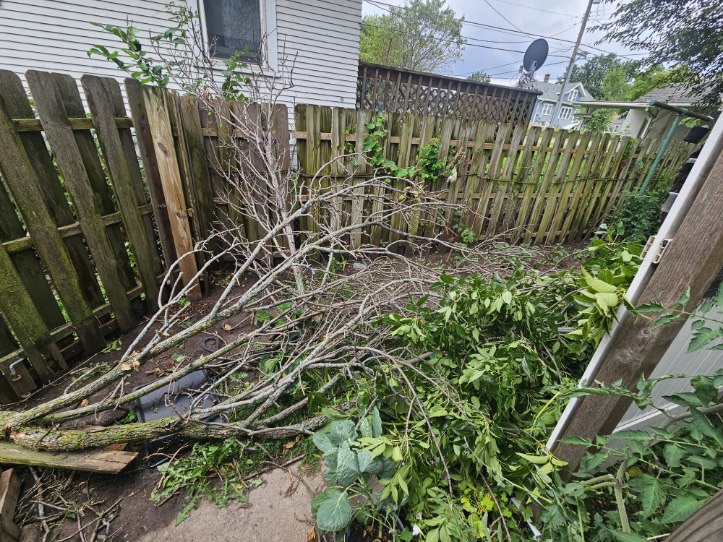
While it’s disappointing to see so much of my garden damaged, I’m reminded that part of homesteading is learning to roll with the punches. This was the first big punch I’ve felt on my journey, but it’s also an opportunity to learn and adapt. I now have bigger plans for my indoor winter garden, and I’m already thinking about how I can better prepare for future storms.
Looking Forward
Part of the reason this experience hit me so hard, both mentally and emotionally, was because it was so unexpected. Living in Minnesota, where natural disasters are almost unheard of, I had prepared myself to handle the usual challenges—pests, disease, and weeds —but not a powerful storm like this. When I was venting to a friend and throwing myself a bit of a pity party, she offered a perspective I hadn’t considered. She suggested that the storm might have actually reignited my passion for the garden, giving me a major project to tackle instead of just the routine tasks of weeding and waiting. Her optimism was a turning point for me; it helped me shift from a reactive mindset to a proactive one. The storm was done, so rather than dwell on the damage, it was time to focus on finding solutions and moving forward.
In the end, this experience has reinforced the importance of resilience in urban homesteading. Things won’t always go as planned, and sometimes nature will throw unexpected challenges your way. But with patience, the right tools, and a positive mindset, you can navigate these setbacks and continue to grow—not just your garden, but your skills as a homesteader.
As I move forward, I’m excited to replan and make the most of what’s left of the growing season. My indoor winter garden will now play a more significant role in my homesteading journey, and I’m determined to come back stronger next year.

This storm was a tough lesson, but it’s one that every homesteader faces at some point. If you’ve been hit by a storm or any other setback, remember to take it one step at a time, lean on your community, and don’t lose sight of the bigger picture. The harvest might be smaller this year, but there’s always next season.


 The Downtown Dirt
Leave a comment